
SURGICAL TREATMENTS
SURGICAL TREATMENTS

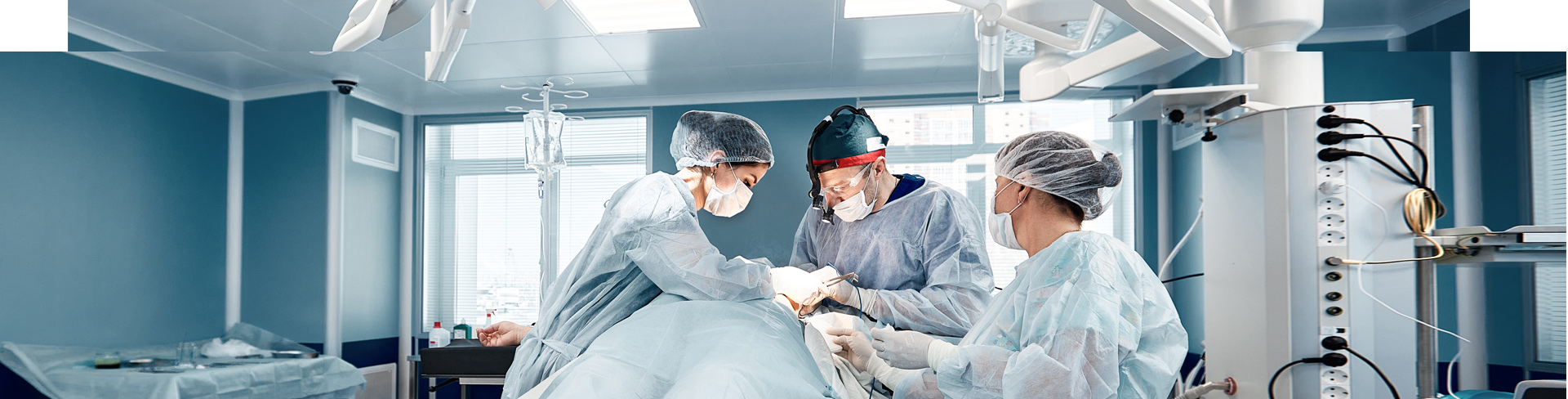
Dental and oral problems can often not be treated superficially with medication or simple treatments. Surgical treatments may be required for such issues. Surgical treatments for different problems in the mouth and teeth are also vital to prevent other health problems.
We can treat cysts, tumors, hereditary anomalies, and traumas in your jaw with jaw surgery. There are different approaches to jaw surgery, as in many treatments. We offer you the most effective treatment in the right direction.
What are the Surgical Treatments for Dental Problems?
● Wisdom Teeth
● Implant Treatment
● Sinus Lifting
● Gum Aesthetics
What is the Benefit of Sedation in Surgical Treatments? How can the Feeling of Fear and Anxiety be managed?
Sedation is an ideal anesthesia method to eliminate your feeling of pain and avoid stress and anxiety. You will receive some anesthetic drugs during sedation. These will deeply relax you and put you in a calm condition. During sedation, you remain conscious and respond and follow your doctor’s instructions.However, you perceive external stimuli only vaguely. After the sedation effect wears off, you won’t remember what happened during the treatment.
Wisdom Teeth
Wisdom teeth are the last teeth to emerge in humans. They emerge in the oral cavity as posterior molars, usually between 18 and 25. Wisdom teeth typically do not only have very little space; they can sometimes protrude toward the cheeks or be angled. For this reason, they cannot be found in the normal position in the mouth most of the time. They can put pressure on existing teeth and damage them. In such cases, wisdom teeth should be extracted.
Most of the time, these teeth can only come out in half and may be covered with some mucous membrane. Along with this, there may be bacterial deposits under these teeth that cause permanent inflammation. This is not only a stress/threat to the immune system but can also lead to acute inflammation accompanied by severe pain and swelling.
Implant Treatment
Dental implants are artificial tooth roots placed directly into the jawbone instead of natural teeth that have been lost or need to be extracted. For some reasons such as aesthetics, speaking, chewing, digestion, and supporting the spine, it is necessary to fill the place of the missing teeth with implants. Crowns, bridges, or removable prostheses are fixed on the dental implant. Thus, the implants take on the role of your natural tooth root; transmitting the chewing pressure to the dental bone ensures that the vertical and horizontal volume of the bone is preserved and not melted. Thanks to the dental implant, you will regain your chewing habits, your speech will improve, and you will remove the bad appearance of the existing gaps in terms of aesthetics.
Sinus Lifting
Implants are placed inside the jawbone so that the bone firmly supports them. However, if your jawbone is not of sufficient size and volume for this, the implants cannot be placed into the bone with the desired strength. In these cases, bone formation processes are needed before the implant is placed. The most reliable method of bone formation in the posterior regions of the upper jaw is sinus lifting treatment.
There are spaces in the upper jaws and the maxillary sinuses above the posterior teeth. As a result of the extraction of the upper back teeth, the sinuses melt the bone and loose due to gravity. In this case, the patient who wants to have an implant may not have enough bone for the implant. The process of raising the sagging sinuses in the implant treatment in the posterior regions of the upper jaw is called “Sinus Lifting.” After the sinuses are lifted, the bone is supported with biomaterial applications such as bone graft (bone powder) and membrane.
This procedure can usually be performed in the same session and the implant operation. However, in cases where the sagging is high, and the remaining bone tissue is 1-2 mm, it is more suitable to apply as two separate operations. Implant treatment, used as two different operations, can take up to 6 months.
Sinus Lifting is a surgical method used in more complicated cases in the upper jaw where the amount of bone in the posterior region is meager. Good planning is essential to minimize complications. Sinus lifting should be done by physicians who are experts in their field. Without this procedure, the chances of success of implant treatment will also be meager.
Personalized Abutment / Implant
The implant consists of two different parts. One of them is the titanium screw that will stick into your jawbone, and the other is the upper part that will go into your screwed tooth, known as the abutment. Briefly, abutments are the parts of your teeth visible on your gum. Implant companies produce abutments in different lengths and diameters in a standard way. However, they may not support the shape of the gum in every patient and condition in a completely natural way.
In personalized implant treatment, abutments are explicitly outstanding according to the angle of the implant, the relationship of the patients with the gum shape and the tissues around the gum, and the coatings to be preferred. With personalized implant/abutment treatment, you can have a much more aesthetic smile with personalized implant/abutment treatment.
Gum Aesthetics
Gum aesthetics or pink aesthetics are cosmetic procedures applied to the gums. The gum is a critical framework surrounding your teeth and precisely determines their appearance. For an asymmetrical smile, you must have healthy gums. Along with function of supportive tissues of your teeth, your gums also have the function of surrounding your teeth aesthetically and integrating the appearance.
Your teeth must be in harmony with your lips and gums for an aesthetic smile. Gum aesthetics is an essential part of smile design.
ENDOCROWN WITH CAD-CAM CERAMICS SYSTEM
Endocrowns with CAD-CAM ceramics system can use for severely damaged teeth.
Endocrowns can eliminate the need for full coverage crowns, preserving more of the tooth's natural structure.
The ceramic material used in endocrowns mimics the appearance and strength of natural teeth.
CONSCIOUS SEDATION DENTAL TREATMENT
Conscious sedation dental treatment involves the use of medication to help patients relax during dental procedures.
Patients remain awake and responsive throughout the procedure.
The dosage of sedative medications is carefully determined based on the patient's medical history and needs.
Dental professionals closely monitor patients during sedation to ensure safety and efficacy.
After the procedure, patients may have little or no memory of the treatment, reducing any potential traumatic associations.
FAQs
1.What is Turkey's local currency?
The local currency of the Republic of Turkey is the Turkish Lira. Our patients can convert their cash from exchange offices to Turkish Lira.
2.Can I withdraw money from ATMs?
Our patients can withdraw money in Turkish Lira, Euro and Dollar through ATMs in Turkey. You can easily withdraw money with foreign language options available at ATMs.
3.Can I drive in Turkey with my own license?
Foreigners can use their own vehicles with the obligation to carry their own driver's license, vehicle license and passport with them. Vehicles are driven on the right side of the road in Turkey.
4.How are the sockets used in Izmir and Turkey?
The sockets in Turkey are dual like the sockets used in Europe.
5.Can I use my mobile phone in Izmir?
If you have your phone line open for use abroad before coming to Turkey, you can use your own operator as well as local GSM operators.